The concept of resilience, understood as the ability to cope with and overcome adversities, has gained relevance in contemporary society. In this article, we will explore how physical exercise can be a fundamental pillar for the development of resilience and emotional well-being. Throughout these pages, we will discover the history and evolution of resilience, analyze in depth its current benefits, challenges and trends, compare different perspectives and offer practical advice and evidence-based recommendations.
Introduction
Resilience, a term from physics and adapted to psychology in the 1970s, refers to the ability to recover from situations of stress, adversity, trauma or tragedy. In the context of emotional health, resilience does not simply imply resisting or supporting pressure, but develop the ability to adapt, learn and grow from challenging experiences. Physical exercise, for its part, has proved to be a determining factor in promoting emotional well-being and managing stress.
History and Background
To understand the profound meaning of resilience, it is necessary to go back to its origins. His initial conceptualization is attributed to psychologist Boris Cyrulnik, who in the 1970s used the term "resilience" to describe the ability of certain people to overcome trauma and adversity. From that moment on, the concept has gained ground in psychology, education and other fields related to mental and emotional health.
An important milestone in the understanding of resilience was the identification of protective factors, those personal elements or environments that contribute to strengthening the resilience of an individual. Further research has highlighted the central role of self-perception, social support, the ability to seek help, the ability to regulate emotions and cognitive flexibility.
Analysis in Deep
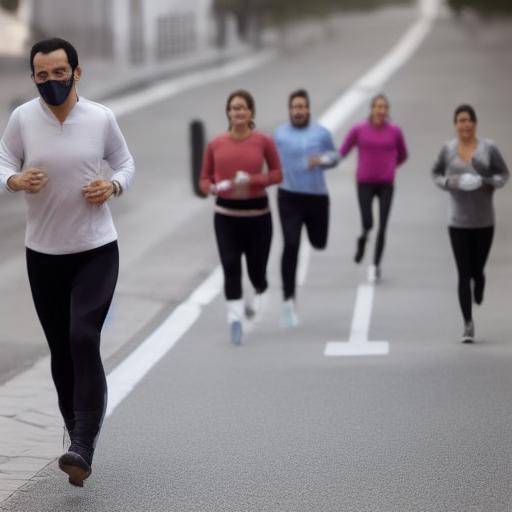
The benefits of physical exercise in building resilience and emotional well-being are multiple and profound. Regular physical activity not only strengthens the body, but also generates important impacts on the mind. Exercise releases endorphins, hormones associated with well-being, reduces stress and anxiety, improves self-esteem and promotes a sense of control over one's own life. These effects have a direct impact on the ability to face difficult situations and mental agility to find solutions.
In addition, exercise can be an escape and renewal space, providing a time and environment to disconnect from daily stress and concentrate on body movement, which can be an important protection factor against adversity.
Comprehensive review
In the area of resilience and exercise, it is essential to consider the different applications and contexts in which these practices can generate a significant impact. From childhood to adulthood, physical exercise can contribute significantly to building resilience and effective stress management. This learning can be especially important in early stages of life, laying the groundwork for facing future challenges.
Likewise, different physical disciplines, from yoga to weight lifting, offer various benefits for the body and mind, adapting to individual preferences and needs. It is important to recognize the diversity of options and encourage experimentation to find those exercises that not only strengthen the body, but also the spirit.
Comparative analysis
By comparing resilience, exercise and emotional well-being, many similarities and synergies are revealed. All of them are involved in a holistic process of personal strengthening, working together to enhance the capacity to face challenges and promote comprehensive health.
Physical exercise, like resilience, involves a process of adaptation and gradual overcoming. Physical discipline can offer a way to develop resilience, challenging and strengthening the body, while developing persistence, discipline and self-confidence. Together, these qualities are fundamental to confront adversity and overcome obstacles.
Practical Tips and Accessible Recommendations
If you want to cultivate resilience through exercise, here are some practical tips:
- Find an activity you enjoy: Choose an exercise that beats you and motivates you, to become a space of personal well-being and development.
- Establish realistic goals: It defines attainable goals that defy you but do not overwhelm you. Celebrating every achievement, however small, will strengthen your confidence in your abilities.
- Cultivate the record: Resilience feeds on persistence. Keep a regular exercise routine, even in difficult times, to strengthen your overcoming capacity.
- Integrate exercise into your daily life: Find opportunities to incorporate physical activity into your routine; walk instead of using the car, climb the stairs instead of taking the elevator, or perform small active breaks on your working day.
- Promotes self-care: Listen to your body and attend to your needs. Exercise must be a tool to strengthen you, not to punish you.
- Seek support: Share your experiences with other people, attend group classes or look for the company of friends with similar interests. Sharing experiences strengthens the spirit and sense of community.
Perceptions of Industry and Expert Reviews
Current research on the intersection between resilience, exercise and emotional well-being has generated growing interest in various fields, including psychology, education, public health and well-being. Experts agree on the importance of considering these factors in promoting comprehensive health and developing effective strategies for managing stress and adversity.
A recent study led by Dr. María García, a psychologist specializing in mental health and emotional well-being, highlights the importance of adopting a multidisciplinary approach that incorporates physical exercise as a central tool in promoting resilience. According to Dr. García, "Exercise not only strengthens the body, but also nourishes the spirit, providing a solid basis for addressing the challenges of everyday life."
Case Studies and Practical Applications
Throughout different fields and contexts, studies have been carried out that demonstrate the impact of exercise on the development of resilience and emotional well-being. For example, in working environments, programs that promote physical activity have proven to reduce stress levels among employees and increase their overall well-being.
In another study carried out in an educational context, it was observed that students who participated in sports or physical activities had a greater willingness to face academic and emotional challenges, developing a greater resilience to stressful situations.
Future Trends and Predictions
As awareness of the importance of resilience and emotional well-being in comprehensive health continues to grow, physical exercise is expected to play an increasingly significant role in promoting these qualities. In addition, the integration of innovative technologies, such as mobile applications for exercise monitoring and devices for emotional health monitoring, promises to provide new tools for building resilience through exercise.
Conclusion
In conclusion, the development of resilience through exercise is a holistic process involving the strengthening of the body, mind and spirit. By understanding the intersection between resilience, exercise and emotional well-being, we can move towards a more balanced and satisfactory life. Cultivating resilience through exercise not only strengthens our ability to face challenges, but also nourishes our emotional well-being in a holistic way.
Frequently asked questions
**Does the type of exercise influence the development of resilience?**Yes, different types of exercise can influence the development of resilience. Activities such as yoga, which combine physical exercise with mindfulness and relaxation approaches, can be especially beneficial to strengthen resilience.
**How much exercise is needed to improve resilience?**There is no specific amount of exercise that guarantees the development of resilience. The important thing is to keep a regular and consistent routine, adapted to individual abilities.
**Can exercise help manage stress and anxiety?**Yes, regular exercise has proven to be effective in reducing stress and anxiety by releasing endorphins and generating a calming effect on the body and mind.
**Group exercise has additional benefits for resilience?**Participation in group exercise activities can provide additional benefits for resilience by providing a sense of belonging, social support and fellowship.
**What is the role of exercise in overcoming adversity?**Exercise can be a powerful tool for overcoming adversity by strengthening mental and emotional strength, fostering autonomy and promoting a sense of control over one's own life.
**Is the development of resilience through exercise equally relevant in different stages of life?**Yes, the development of resilience through exercise is relevant throughout all stages of life. From childhood to old age, exercise can contribute significantly to strengthening resilience and emotional well-being.
External references
- Cyrulnik, B. (1993). The ugly ducklings. Barcelona: Gedisa.
- American Psychological Association. (n.d.). Resilience guide for parents & teachers. Retrieved from apa.org.
- Marshall, S., " Celermajer, D. (2018). Exercise for Resilience. American Journal of Lifestyle Medicine, 12(2), 150–153.
Concluding, physical exercise offers a valuable way to develop resilience and strengthen emotional well-being. By integrating body movement into our daily routine, we not only strengthen our body, but also cultivate the mental and emotional strength necessary to meet the challenges of life. We hope that this article has provided a deeper understanding of the intersection between resilience, exercise and emotional well-being, and inspired you to explore this connection in your own life.