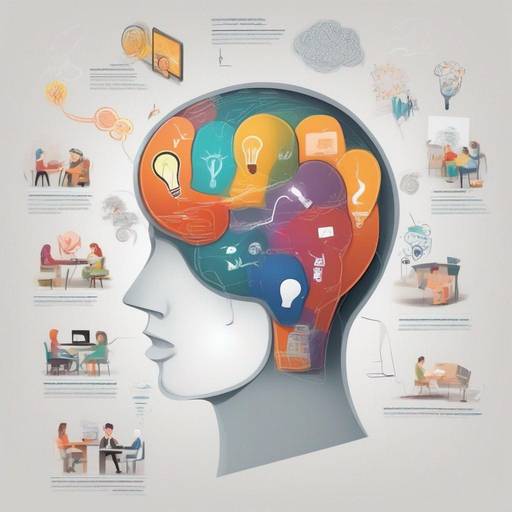
Creativity is a crucial factor in the development of an entrepreneurial mentality. In the competitive business world, the ability to generate innovative ideas, find creative solutions and think unconventionally is essential for business success. In this article, we will explore in depth the impact of creativity on the development of an entrepreneurial mentality, examining its history, benefits, practical applications, and future trends.
Introduction
Creativity and entrepreneurship are two elements that are closely interrelated. The entrepreneurial mentality implies the willingness to take risks, the ability to identify opportunities and the tenacity to move forward despite the challenges. On the other hand, creativity is the engine that drives innovation, generating new ideas, products or business models.
In this article, we will explore how creativity influences the entrepreneurial mentality, analyzing its impact on different contexts, from business to social entrepreneurship and technological innovation. We will also provide practical advice, industry insights and future predictions to help readers understand and apply these concepts in their own projects and undertakings.
History and Background
The relationship between creativity and entrepreneurship has deep roots in history. Since the dawn of civilization, entrepreneurs have played a crucial role in economic and social development, as well as creative individuals who have challenged established norms and shaped new ways of thinking and working. Over the centuries, the interaction between creativity and entrepreneurial spirit has led to significant progress in all spheres of life.
One of the first documented manifestations of entrepreneurial creativity is the emergence of the first commercial companies in ancient civilizations, where visionary individuals took risks to generate wealth through the exchange of goods and services. Over time, this business mentality has been transformed and adapted to the challenges and opportunities of each era, leading to innovations such as the Industrial Revolution, the era of information and the economy of knowledge.
Throughout history, many visionary entrepreneurs have left an indelible mark, from the pioneers of the industrial era, such as Andrew Carnegie and Thomas Edison, to contemporary innovators such as Steve Jobs, Elon Musk and Mark Zuckerberg. These individuals have shown how the combination of creativity, business vision and determination can lead to the creation of companies and products that transform the world.
Detailed Analysis
Creativity brings a number of significant benefits to those who seek to develop an entrepreneurial mentality. First, the ability to imagine and conceive innovative ideas allows entrepreneurs to identify opportunities where others see only challenges. Creative mentality fosters problem solving through innovative approaches and the ability to think beyond conventional limits.
From a business standpoint, creativity also plays a crucial role in differentiating products and services in a saturated market. The ability to innovate and adapt to the changing demands of consumers can provide companies with a sustainable competitive advantage. In addition, creativity is also fundamental in the creation of business models, allowing to develop strategies that will enable us to take advantage of emerging opportunities.
However, creativity also presents challenges for entrepreneurs. The management of uncertainty and ambiguity inherent in innovation can be overwhelming for many. The need to balance originality with commercial viability, as well as resistance to risk aversion, are aspects that entrepreneurs must effectively address to fully capitalize on the potential of creativity.
Comprehensive review
Creativity and entrepreneurship are applicable in various business areas, from technological startups to small local businesses and non-profit organizations. Moreover, its influence extends beyond the commercial sphere, impacting social innovation, sustainability and cultural change.
For those who seek to cultivate an entrepreneurial mentality, creativity provides a set of fundamental tools. The ability to generate creative solutions, adapt to changing environments and anticipate market needs has become a prerequisite for business success in the modern era. Creativity also plays a crucial role in solving complex problems, identifying new opportunities and fostering interdisciplinary collaboration.
To maximize the impact of creativity on the development of an entrepreneurial mentality, it is crucial to adopt approaches based on innovation and experimentation. The learning mentality, the willingness to take calculated risks and the openness to feedback are critical to fostering an enabling environment for creativity and entrepreneurship.
Comparative analysis
Creativity and entrepreneurship share significant similarities in their approach to value generation and innovation. Both concepts require an open mindset, an approach to change and willingness to challenge established conventions. However, despite its similarities, creativity focuses more on the generation of original ideas, while the entrepreneurial mindset focuses on the implementation of these ideas in the business context.
Creativity can be regarded as the fuel that drives the driving force of the entrepreneurial mentality. While creativity can be manifested in various contexts, from artistic creation to technical innovation, its integration into the business sphere requires an entrepreneurial mentality to convert creative ideas into successful companies, products or services.
Practical Tips and Accessible Tips
For those seeking to foster creativity and entrepreneurial mentality, here are some practical tips that can be useful:
- Cultivate an environment that promotes experimentation and taking calculated risks.
- Open failure as an opportunity to learn and grow.
- Establish collaborative networks and promote diversity of perspectives.
- Keep track of emerging trends and opportunities in your industry or sector.
- Develop the ability to effectively communicate creative ideas and business visions.
- Find mentors or models to continue to personify the entrepreneurial mentality and creativity.
Industry Perspectives and Expert Reviews
Several industry leaders and entrepreneurial experts have shared their perspectives on the intersection between creativity and the entrepreneurial mentality. According to Elon Musk, the founder of SpaceX and Tesla, "Creativity is the ability to apply novel ideas to solve problems, and entrepreneurship is the ability to bring those solutions to the market. Both require a bold vision and an implacable determination."
Similarly, Sheryl Sandberg, Facebook Operations Director, highlighted the importance of combining creativity with business action: "The creativity without a business approach is art, and the entrepreneurial approach without creativity is just management. The combination of both is what drives true innovation."
Case Studies and Practical Applications
The impact of creativity on the entrepreneurial mentality is evident through numerous case studies and practical applications. Companies like Airbnb and Uber have taken advantage of creativity to disrupt established industries and build transformative business models. Similarly, individual entrepreneurs have used creativity to develop products and services that address unmet needs on the market.
Non-profit organizations and social entrepreneurship initiatives also illustrate how creativity can boost social change and generate positive impact on communities. Projects that address global challenges, such as environmental sustainability, social inclusion and public health, depend largely on the creativity applied to the entrepreneurial mentality to find innovative and sustainable solutions.
Future Trends and Predictions
As we enter an era characterized by rapid technological evolution and global interconnection, the intersection between creativity and entrepreneurship is expected to be even more important. The demand of professionals capable of boosting innovation through creativity and entrepreneurship will be increased in all sectors, from artificial intelligence to circular economy.
Advances in fields such as increased reality, biotechnology, renewable energy and the collaborative economy will provide unprecedented opportunities for those who possess the ability to combine the entrepreneurial mentality with creativity to address global challenges and create sustainable value.
Conclusions
Creativity plays a key role in the development of an entrepreneurial mentality, providing the spark and the energy needed to generate innovative ideas and make them meaningful businesses and projects. By fostering creativity and entrepreneurship, individuals and organizations can embrace new approaches, find creative solutions to complex challenges and contribute to economic and social progress.
As business and social dynamics continue to evolve, the ability to combine creativity with the entrepreneurial mentality will be a crucial differentiation. Those who seek to stand out in an increasingly competitive environment will find in creativity and entrepreneurial mentality indispensable tools to innovate, thrive and contribute positively to society.
Frequently asked questions
What role does creativity play in the development of a successful business model?
Creativity plays a key role in the development of a successful business model by allowing the generation of innovative ideas, the identification of opportunities and the differentiation in a competitive market. The ability to think creatively contributes to the creation of unique value proposals and the adaptation to the changing needs of customers.
What is the importance of the entrepreneurial mentality in today's society?
The entrepreneurial mentality is crucial in today ' s society, as it promotes innovation, job creation, and economic development. The willingness to take risks, the search for opportunities and the ability to convert ideas into concrete actions are fundamental to promoting social and economic progress.
How can creativity and entrepreneurship be encouraged in educational settings?
Creativity and entrepreneurship can be fostered in educational settings through the inclusion of programmes and activities that promote problem solving, critical thinking, and experimentation. The early introduction of entrepreneurship concepts and the creation of spaces that foster creativity can help cultivate these skills from an early age.
What are the challenges associated with integrating creativity and entrepreneurship into traditional corporate environments?
The integration of creativity and entrepreneurship into traditional corporate environments can face challenges such as resistance to change, aversion to risk, and rigid organizational structures. Overcoming complacency and fostering a business culture that values creativity and innovation are key aspects of overcoming these challenges.
What role do diversity and multidisciplinaryness play in strengthening creativity and entrepreneurship?
Diversity and multidisciplinaryness play a crucial role in strengthening creativity and entrepreneurship by fostering the integration of different perspectives, generating innovative ideas, and solving complex problems. Collaboration between individuals with backgrounds, skills and experiences enriches the creative process and promotes the generation of innovative and effective business solutions.
What is the relationship between innovation, creativity and entrepreneurship?
Innovation, creativity and entrepreneurial mentality are closely related, as each one feeds on others to boost progress and change. Innovation emerges from the creativity applied to the resolution of business challenges, and the entrepreneurial mentality provides the determination and ability to act to advance creative ideas and make them meaningful innovations in the market.
Conclusion
Creativity is an invaluable asset in the development of an entrepreneurial mentality, as it enhances the ability to generate disruptive ideas, address complex challenges and create value in business, social and economic environments. By understanding and fostering the intersection between creativity and entrepreneurship, individuals can cultivate skills that will enable them to innovate, lead and prosper in a constantly evolving world.
The combination of creativity and entrepreneurial mentality offers a powerful approach to addressing current and future challenges, promoting sustainable innovation, creating meaningful businesses and the positive impact on society. By adopting an open, proactive and creative mentality, people and organizations can expand the limits of what is possible, contributing to the construction of a future driven by innovation, entrepreneurship and creativity.