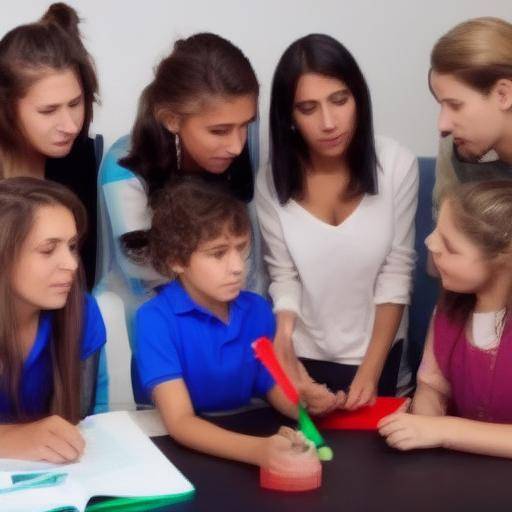
Role-playing is an effective technique for improving service attitude in different sectors. In this article, we will explore in depth the role-playing, its connection with the attitude of service and its impact on personal and professional development. As we move forward, we will discover practical applications, benefits, challenges, current trends and useful tips to successfully implement this technique. In addition, we will analyze real cases, provide expert perspectives and explore future trends in this field.
Introduction
The role-playing technique has gained popularity due to its ability to improve service attitude and interpersonal skills in working and educational environments. Through this approach, participants assume specific roles and participate in simulated scenarios to practice skills, develop empathy and understanding, and improve their ability to deal with challenging situations. This way of experiential learning has proven to be effective in fostering exceptional customer service, proactively managing conflicts and improving effective communication.
History and background
The role-playing has deep roots in theatre and psychology, where it has been used as a tool to understand human behavior and explore different perspectives. Over the years, it has evolved to become a valuable tool in areas such as psychotherapy, education and business development. From its first applications in the 1940s to its integration into current training programs, the role-playing has undergone significant transformation.
In-depth analysis
In exploring role-playing in detail, it is essential to understand both its benefits and its challenges. This approach provides participants with a unique opportunity to develop empathy, improve their active listening capacity and practice problem solving in a safe environment. However, facing challenges, such as resistance to taking roles, lack of authenticity and inadequate management of emotions, can hinder their effectiveness.
Comprehensive review
In considering the practical applications of the role-playing technique, it is crucial to analyze case studies that demonstrate their real impact on commercial and educational environments. In addition, when examining best practices and expert opinions, readers will gain a deeper understanding of how to effectively implement this technique.
Comparative anis
Through a comparative analysis, we will explore how role-playing relates to the attitude of service and personal development. We will identify similarities, differences and possible synergies between these concepts, providing detailed examples and practical scenarios.
Practical advice and recommendations
By offering practical advice and recommendations, this article gives readers a detailed guide on how to implement the role-playing technique to improve the service attitude. Through numbered lists and key points, readers will find clear and actionable guidance to integrate this technique into their own work and educational experiences.
Industry perspectives and expert opinions
Gathering industry perspectives and expert opinions offers a broader view of how role-playing is shaping the way organizations address training and skills development. In addition, this analysis offers future predictions and emerging trends regarding role-playing and its impact on service attitude.
Case studies and practical applications
Detailed case studies and practical applications allow readers to understand how role-playing translates into tangible results through examples of the real world. By disaggregating the results and lessons learned, this approach provides a richer understanding of how role-playing can influence the attitude of service and personal development in different contexts.
Future trends and predictions
In discussing future trends and predictions related to role-playing, attitude of service and personal development, readers will get a clearer view of how this technique will continue to evolve over the next few years and how it can positively affect organizational performance and customer satisfaction.
Conclusions
In short, role-playing offers a valuable approach to improving service attitude, developing empathy and strengthening communicative skills. Its impact extends through various industries and establishes a benchmark for personal and professional development. By effectively implementing this technique, organizations and individuals can foster an exceptional culture of service and engage in continuous growth.
Frequently asked questions
1. How can you apply the role-playing in the field of customer service?
The role-playing can be applied in the area of customer service by simulating common scenarios, such as customer complaints, conflict situations or difficult interactions. By practicing these situations, employees can develop skills to manage such scenarios with empathy and professionalism.
2. What are the benefits of role-playing for personal development?
Role-playing can offer significant benefits for personal development, such as strengthening empathy, improving communication skills and ability to understand different perspectives and emotions.
3. What are the common challenges in implementing role-playing in working environments?
Some common challenges when implementing role-playing include resistance to taking roles, authenticity of interactions and effective management of emotions during simulation.
4. How can role-playing improve customer service quality?
The role-playing can improve the quality of customer service by allowing employees to perform active listening skills, problem solving and empathy, resulting in more effective and satisfying interactions with customers.
5. What is the role of role-playing in leadership training and team development?
Role-playing can play a crucial role in leadership training and team development by enabling team leaders and members to play leadership, decision-making and conflict resolution skills in a controlled simulation environment.
6. How does role-playing influence organizational culture and employee engagement?
Role-playing can positively influence organizational culture by fostering a continuous learning mentality, empathy among employees and a deeper commitment to excellence in customer service.
These frequently asked questions address key aspects related to role-playing, attitude of service and personal development, offering detailed answers that provide clarity and understanding.
In conclusion, role-playing is a versatile tool that can have a significant impact on improving service attitude and personal development. By understanding their history, benefits, challenges and practical applications, individuals and organizations can make the most of this technique to cultivate a culture of exceptional service and continuous growth. With an approach to empathy, authenticity and skill development, role-playing offers an effective way to excellence in customer service and personal and professional enrichment. Get into action and discover how role-playing can transform your approach to service and integral development!