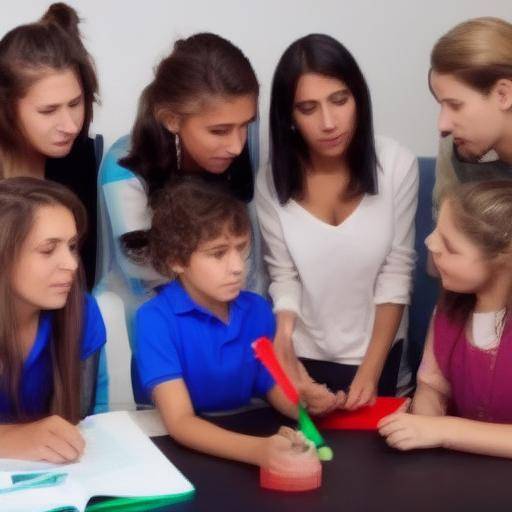
Living in a world characterized by constant challenges can be exhausting, but there are strategies that can help us maintain a positive and constructive mentality. One of these strategies is the role-playing, a technique that can be used to strengthen our emotional resilience, develop communication skills and foster personal growth. In this article, we will explore in detail how we can use the role-playing technique to promote a positive mentality in difficult situations, while also developing our skills and attitudes towards personal development.
Introduction
In the most challenging moments of our lives, we are often forced to face situations that test our mental and emotional strength. Maintaining a positive mentality in the midst of adversity can be difficult, but it is essential to confront the challenges with determination and hope.
In this article, we will explore the role-playing technique and its link to the promotion of the positive mentality in difficult times. We will begin to understand the historical background and development of this technique, exploring its applicability in personal development and its relationship with the promotion of a positive mentality. We will also provide practical advice, concrete examples and expert perspectives so that you can effectively implement this technique in your daily life.
History and Background
The role-playing technique has been used for centuries as an effective method to develop social skills, improve empathy and strengthen the ability to resolve problems. With roots dating back to ancient Greece, where theatre and role interpretation played a fundamental role in society, role-playing has evolved to become a tool commonly used in educational, therapeutic and business areas.
The modern role-playing has experienced significant expansion, with the incorporation of digital technologies that allow to simulate real life scenarios and situations more realistically. This evolution has expanded the scope of the role-playing, opening up new possibilities of application in the field of personal development.
In the development of the concept of positive mentality, key concepts such as optimism, resilience and personal growth have been fundamental to their understanding and promotion. The role-playing technique, by simulating scenarios and challenging situations, offers a unique opportunity to strengthen these qualities.
In the next section, we will explore in depth the benefits and challenges associated with role-playing, specifically in relation to the promotion of positive mentality and personal development.
Analysis in Deep
The role-playing offers a number of significant benefits in the context of personal development and the promotion of the positive mentality. By simulating challenging or conflicting situations, people can practice emotions management, positive thinking and problem solving in a safe and controlled way. This approach allows the ability to maintain a positive mentality even in adverse circumstances, thereby strengthening emotional resilience.
In addition, role-playing facilitates the development of effective communication skills, empathy and interpersonal understanding. These skills are fundamental to foster positive and constructive relationships, which in turn contributes to an optimistic and collaborative mentality in daily interactions.
The challenges associated with role-playing, particularly in the context of the development of a positive mentality, include the need to be open to new experiences and perspectives, as well as the ability to face uncomfortable or stressful situations in a constructive manner. However, these challenges can become significant personal growth opportunities if addressed with an open and responsive attitude.
Comprehensive review
The practical application of role-playing in the context of personal development and the promotion of positive mentality extends to a variety of scenarios and contexts. From educational environments to the workplace, role-playing has become a versatile tool to promote personal growth and strengthen positive attitudes.
Some of the best practices to apply role-playing in the promotion of the positive mentality include identifying recurring challenging or conflicting situations in daily life, creating realistic scenarios to simulate these situations and the active participation of the participants in the representation of roles. By providing constructive feedback and fostering post- Simulation reflection, a continuous learning and personal development approach can be promoted.
In addition, the role-playing technique has become an invaluable resource for therapists, coaches and mental health professionals who work in promoting emotional well-being. By simulating challenging situations in a controlled and supportive environment, individuals are given the opportunity to explore new responses and approaches to address their challenges, which contributes significantly to the promotion of a positive mentality and emotional resilience.
In the next section, we will explore a detailed comparison between role-playing, positive mentality and personal development, highlighting similarities, differences and possible synergies between these fundamental concepts.
Comparative analysis
Role-playing, positive mentality and personal development share a common goal: to strengthen people's emotional and cognitive abilities to face challenges and achieve greater well-being. Although each operates independently, there is a clear intersection between these concepts that deserve to be explored.
While role-playing focuses on the simulation of situations and the practice of effective responses, the positive mentality focuses on the adoption of an optimistic and proactive perspective on daily life. On the other hand, personal development encompasses a broader spectrum of emotional, intellectual and spiritual growth, including the promotion of self-consciousness, emotional management and the pursuit of meaning and purpose in life.
The synergies between these concepts are manifested in the ability of role-playing to strengthen positive attitudes and emotional resilience, which in turn contributes to personal development. Similarly, the promotion of a positive mentality through role-playing can catalyse significant personal growth by fostering positive habits and developing domestic resources to address challenges.
Practical Tips and Accessible Tips
If you are looking to apply the role-playing technique to promote a positive mentality in your daily life, here are some practical tips you can consider:
- Identify challenging situations: Identify situations or scenarios that usually generate stress or negative emotions in your daily life.
- Simulate realistic scenarios: Create realistic scenarios that allow you to practice effective and positive responses to these situations.
- Participate actively: Be actively engaged with role-playing, assuming different roles and exploring multiple perspectives.
- Find constructive feedback: Look for feedback and reflect on your interactions, identifying areas of strength and growth opportunities.
By applying these tips, you can fully benefit from the role-playing technique to promote the positive mentality and strengthen your personal development. In addition, consider seeking guidance from a trained professional to obtain a more personalized and effective approach.
In the next section, we will explore the ideas and opinions of experts in the field, highlighting the perspectives of opinion leaders and renowned professionals who have worked on the role-playing application to promote positive mentality and personal development.
Industry ideas and Expert Reviews
According to clinical psychologist Dr. Alberto Pérez, "The role-playing is a powerful tool that allows us to explore and practice effective responses to challenging situations, promoting positive attitudes and emotional resilience. By simulating scenarios that generate stress or face conflict, people can develop strategies to address these situations constructively. "
In addition, the coach of life and personal development, María Rodríguez, emphasizes that "The role-playing practice not only strengthens social and emotional skills, but also promotes self-consciousness and personal empowerment. By adopting roles and exploring different perspectives, people have the opportunity to expand their understanding of themselves and others, which contributes significantly to personal development. "
These expert perspectives highlight the importance and potential of role-playing as an effective tool to maintain a positive mentality and nurture personal growth. In considering the views of experts in the field, we can gain a deeper and more insightful understanding of the practical and therapeutic dimensions of role-playing in the context of personal development.
Case Studies and Applications in Real Life
Throughout various industries and contexts, role-playing has found significant applications in promoting positive mentality and personal development. From educational and organizational environments to the therapeutic field, role-playing has been used to promote coping skills, stress management and self-esteem strengthening.
An outstanding example is the use of role-playing in interpersonal skills development programs in working environments. Through the simulation of challenging situations, such as conflict resolution or unsatisfied customer management, professionals can practice effective and collaborative responses, contributing to a positive mentality and healthier working relationships.
In the educational field, role-playing has also become a valuable tool to promote empathy, interpersonal understanding and problem solving among students. In simulating conflict or disagreement, students have the opportunity to explore and practice constructive approaches to address these scenarios, thus cultivating positive attitudes and conflict resolution skills.
These examples illustrate the versatility and effectiveness of role-playing in promoting positive mentality and personal development in real contexts. By exploring case studies and practical applications, we can fully appreciate the positive impact this technique can have on people's lives.
Future Trends and Predictions
As the field of personal development and emotional well-being continues to evolve, role-playing is expected to play an even more relevant role in promoting positive mentality and strengthening emotional skills. With advances in simulation technologies and virtual reality, role-playing is in a unique position to deliver immersive and highly effective learning experiences.
In addition, it is expected that the integration of role-playing into emotional well-being and personal development programs will be adopted more widely in educational, corporate and therapeutic contexts. This expansion will give more people the opportunity to benefit from the significant advantages that role-playing can bring to their lives.
Conclusion
In short, role-playing is a powerful technique that can be used to promote a positive mentality and personal development in difficult times. By simulating challenging situations and practicing effective responses, people can strengthen their emotional resilience, develop communication skills and foster positive attitudes.
Through this comprehensive analysis, we have explored the historical roots and evolution of role-playing, discussed their benefits and challenges, explored their application in the context of personal development and positive mentality, and shared practical advice, expert opinions and real-life applications. It is clear that role-playing has a significant impact on the promotion of emotional well-being and the formation of positive attitudes.
FAQs
What is the difference between role-playing and cognitive-behavioral therapy?
The role-playing, often used in psychotherapy, involves simulation of interpersonal social situations to help individuals practice effective responses and behaviors. On the other hand, cognitive-behavioral therapy focuses on identifying and modifying negative thinking patterns and behavior that contribute to emotional problems, using techniques such as role-playing as an integral part of therapy.
Is the role-playing suitable for all ages?
Yes, role-playing can be adapted to different age groups and contexts. From educational environments to professional development programs, role-playing can be modified to meet the specific needs and capabilities of each individual.
How can I practice role-playing in my daily life?
You can practice role-playing with friends, colleagues or family members to simulate challenging or conflicting situations and to practice effective responses. You can also look for the guide of a therapist or coach to get a more structured and effective orientation.
Can role-playing be used as a conflict resolution tool?
Yes, role-playing is an effective tool to address and resolve conflicts by practicing effective communication, empathy and seeking collaborative solutions. This technique allows the parties involved to explore different perspectives and engage in constructive approaches to conflict resolution.
Is the role-playing useful to improve communication skills?
Yes, role-playing is an effective tool to improve communication skills by practicing verbal and non-verbal interaction. By simulating realistic conversations and scenarios, people can improve their ability to express themselves clearly, understand social signals and respond effectively.
Can role-playing be used to overcome scenic fear or social anxiety?
Yes, role-playing can be a useful technique to overcome scenic fear or social anxiety by allowing people to practice social interactions in a controlled and supportive environment. By simulating difficult social situations, people can develop effective strategies to manage anxiety and feel safer in these situations.
Conclusion
In conclusion, role-playing is a powerful tool that can be used to promote a positive mentality and personal development in difficult times. By simulating challenging situations and practicing effective responses, people can strengthen their emotional resilience, develop communication skills and foster positive attitudes. With proper guidance and consistent application, role-playing can become a transformative tool for growth and emotional well-being.
In considering all aspects discussed in this article, it is clear that role-playing has the potential to positively impact people's lives, strengthening their ability to face challenges with determination, empathy and optimism. If you are looking to strengthen your emotional resilience, improve your communication skills and promote a positive mentality, consider integrating role-playing into your personal development and emotional well-being approach.