The role-playing, or role play, is a personal learning and development technique that allows people to explore situations and practice skills in a safe and controlled environment. This technique can be especially useful for practicing the establishment of personal limits, a crucial skill for emotional well-being and healthy relationships. In this article, we will explore in detail how role-playing can be an effective tool to develop the ability to set personal limits, offering practical advice, examples and real cases for your application.
Introduction
The establishment of personal limits is fundamental to maintaining healthy relationships, both in the personal and professional spheres. However, many people find it difficult to establish and maintain clear limits, which can lead to situations of stress, emotional exhaustion and interpersonal conflicts. The role-playing, by simulating situations where it is necessary to set limits, can provide a safe and concrete way to practice this skill and develop confidence in its application.
In this article, we will explore how role-playing can be used to practice the establishment of personal limits effectively. First, we will analyze the historical context and the foundations of this technique. Then we will enter into a detailed analysis of the benefits, challenges, applications, and the latest trends in role-playing in the context of personal development and setting limits. Finally, we will offer practical advice, real case studies, and future forecasts for the successful implementation of these techniques.
History and Background
The role-playing technique has its roots in psychology and theatre, and has been used for decades as a tool for learning, therapy, and the development of interpersonal skills. It goes back to the psychodrama experiments of Jacob L. Moreno in the 1920s, where scenarios and roles were explored to better understand and address social and psychological problems. Over time, role-playing has expanded to various fields, including psychotherapy, education, corporate training, and more recently, personal development.
The role-playing has evolved significantly over the years, adapting to changing social needs and contexts. It has been successfully used in conflict resolution, communication skills development, leadership training, and the practice of selling scenarios, among others. Its application in the field of personal development has gained popularity as it recognizes the importance of emotional intelligence and interpersonal relationship skills in emotional well-being and mental health.
Analysis in Deep
The role-playing offers many benefits for personal development, particularly in the context of establishing personal limits. By simulating everyday or challenging situations, people have the opportunity to experience different responses and strategies to establish limits effectively. This practice can help to increase self-confidence, improve communication capacity, and promote empathy towards one's own needs and those of others.
However, role-playing also presents challenges, especially in terms of realism and effectiveness. The simulated nature of situations can hinder the transfer of skills practiced to real life. In addition, some participants may feel uncomfortable or insecure when assuming roles that represent difficult or sensitive personal experiences. Despite these challenges, role-playing remains a valuable technique for personal learning and growth.
Comprehensive review
In the area of setting personal boundaries, role-playing has been highlighted as an effective tool to address specific scenarios where it is crucial to establish and maintain clear limits. For example, in working situations, role-playing can be used to practice assertive communication with colleagues or superiors, or to handle conflict situations constructively. Personal relationships, role-playing can be used to practice the expression of personal needs, the defense of one's own emotional limits, and the management of situations of manipulation or emotional abuse.
Experts in psychology and personal development have supported the use of role-playing as an effective tool for the development of skills related to the establishment of personal limits. By simulating problematic situations and practicing assertive responses, people can strengthen their ability to identify and communicate healthy boundaries, and to deal with situations that challenge these limits.
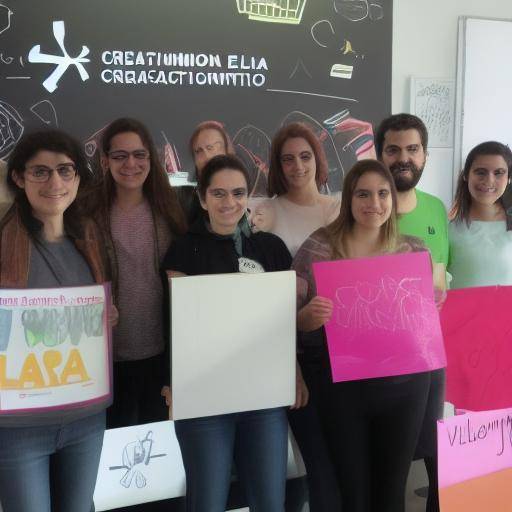
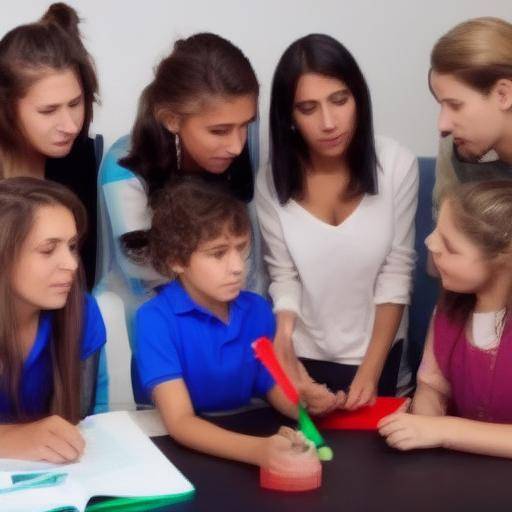
In terms of best practices, it is recommended that role-playing sessions be conducted in a safe and respectful environment, with the guidance of a trained facilitator. The facilitator can play a crucial role in creating realistic scenarios and providing constructive feedback to participants. In addition, the use of multiple roles, scenario variations and the addition of feedback from other participants can enrich the experience and broaden the understanding of different perspectives.
Comparative analysis
By comparing the role-playing with the process of establishing personal limits, similarities and differences that can report their joint application are revealed. Both role-playing and the establishment of personal limits require awareness, self-knowledge, and effective communication skills. Both processes involve the exploration and establishment of healthy limits in different contexts, whether in interpersonal relationships, working environments, or personal situations.
However, it is important to note that role-playing is a tool to practice and develop skills, while setting personal limits is a continuous process of self-assertion and self-care in real life. Role-playing can be useful in acquiring new skills and increasing confidence, but it is crucial to integrate these skills acquired in everyday life to achieve lasting results.
Practical Tips and Recommendations
If you are interested in using role-playing to practice setting personal limits, here are some practical tips to maximize your effectiveness:
- Select realistic scenarios: Choose situations where you can practice setting specific limits you face in your life.
- Look for constructive feedback: After role-playing sessions, look for feedback from your gaming partners or a facilitator to identify areas of improvement.
- Practice empathy: In addition to defending your own limits, practice understanding and respecting the limits of others in the roles you assume.
- Apply what you learned: Try to apply the skills practiced in role-playing in real situations, and see how they translate into your daily life.
Industry Perspectives and Expert Reviews
Experts in psychology and personal development have observed the potential of role-playing as a valuable tool for the development of the establishment of personal limits. From therapists and coaches to business trainers, many professionals have integrated role-playing into their personal and professional development programs, recognizing their ability to improve self-confidence, assertive communication, and conflict resolution.
Case studies and practical applications
To illustrate the effectiveness of role-playing in establishing personal limits, let us consider Rosa, a sales executive who faced difficulties in establishing clear limits with her clients. Through role-playing sessions designed to simulate negotiation and complaint management scenarios, Rosa was able to practice assertive responses and strategies to maintain healthy limits in her work. As a result, he experienced a significant improvement in his communication skills and in his ability to effectively defend his limits.
Future Trends and Predictions
As awareness of the importance of establishing personal limits continues to grow, role-playing is likely to remain a valuable tool in the development of these skills. The integration of technology, as simulation platforms and virtual reality, could further enhance the potential of role-playing in personal development.
Conclusion
In short, role-playing is a powerful technique to practice the setting of personal limits. By simulating challenging situations and practicing assertive responses, people can develop communication skills, increase self-confidence, and strengthen their ability to defend healthy boundaries in different contexts. By applying best practices and seeking constructive feedback, role-playing can be an effective tool for personal growth and emotional well-being.
FAQs
What is the difference between role-playing and role-playing therapy?
Roleplay therapy is a specialized form of psychotherapy that uses role-playing as a tool to specifically address emotional or psychological problems. Role-playing, in a more general sense, can be used for a variety of purposes, including personal development, business training, and enhancement of interpersonal skills.
Is the role-playing useful for everyone, or are there certain people who do not benefit from this technique?
While role-playing can be effective for many people, there are individuals who may feel uncomfortable or unsafe when participating in this activity. It is important to respect the limits and preferences of each person and to offer alternatives for personal learning and development.
How can I incorporate the role-playing in my daily life to practice the establishment of personal limits?
You can incorporate the role-playing in your daily life looking for opportunities to simulate challenging scenarios where you need to set clear limits. This could include difficult discussions at work, conflict situations in personal relationships, or negotiating scenarios. Practicing assertive responses in these simulated situations can help you strengthen your limit setting skills.
Can role-playing help in developing communication and empathy skills?
Yes, role-playing is an effective tool to develop communication and empathy skills. By assuming different roles and simulating scenarios, people can practice the expression of their needs and emotions, as well as the understanding of the perspectives of others, thus improving their ability to effectively relate to others.
Should I look for a professional's guide to participate in role-playing sessions?
If you are interested in participating in role-playing sessions to practice setting personal limits, it is advisable to look for the guidance of a trained facilitator. The facilitator can help design realistic scenarios, provide constructive feedback, and ensure a safe and respectful environment for practice and learning.
Are there specific tools or resources I can use to perform role-playing sessions?
Yes, there are a variety of resources you can use to perform role-playing sessions, including books, stage scripts, and online tools. Find resources that are relevant to your specific needs and objectives, and consider working with other participants or groups to enrich the role-playing experience.
In short, role-playing can be a powerful tool to practice the establishment of personal limits and develop assertive communication skills in different areas of life. By harnessing the benefits of role-playing effectively and respectfully, people can strengthen their ability to maintain healthy boundaries and foster healthy and satisfying interpersonal relationships.