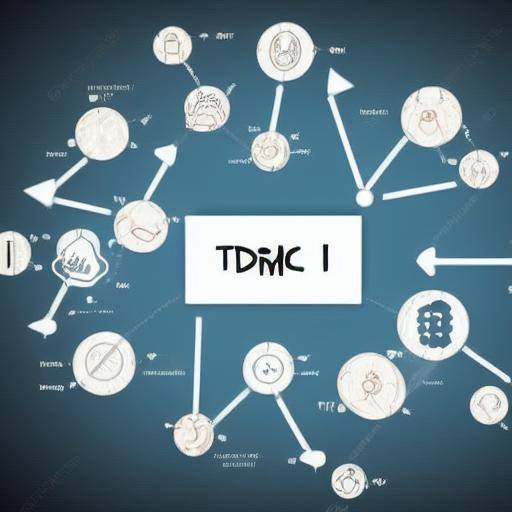
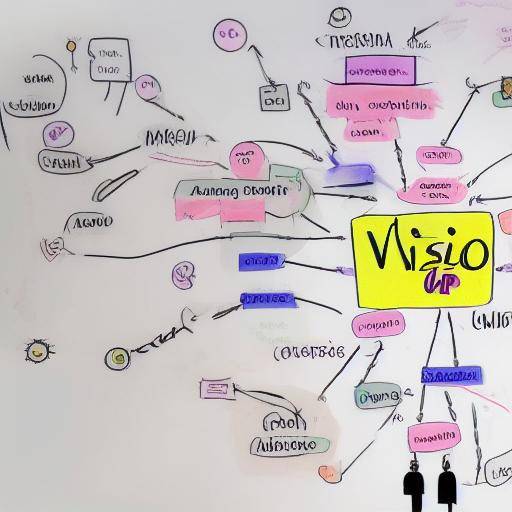
The mind mapping, or mental map, is a powerful visual organization technique that allows you to connect ideas creatively and effectively. When applied to self-assertion and organization, it can become a powerful tool for personal and professional growth. In this article, we will explore how to use mind mapping to organize positive affirmations, thus enhancing their impact and ease of application in everyday life.
Introduction
In the current era, the accelerated pace of everyday life can challenge our ability to maintain a positive and organized approach. The mind mapping technique offers an innovative solution to address this situation by allowing us to visually structure our ideas, goals and affirmations significantly. In this article, we will discover how to combine this technique with positive affirmations to make them an even more powerful tool for personal growth.
History and Background
The mind mapping has its roots in the 20th century, when the British psychologist Tony Buzan developed this approach of graphical representation of ideas. Its objective was to promote creativity, critical thinking and cognitive organization. Over time, mind mapping has evolved and implemented in various disciplines, from education to business.
Benefits of Mind Mapping for Positive Affirmations
By combining mind mapping with positive affirmations, a synergy is achieved that enhances its effects. This approach allows us to visualize and structure our goals, dreams and positive attributes in a way that drives us to act. In addition, the visualization of claims on a mental map facilitates their understanding and memory, which reinforces their impact on our daily thinking and behavior.
How to Create a Mental Map of Positive Affirmations
- Identify your key claims: Start by identifying the positive statements you want to incorporate on your mental map. These may be related to self-esteem, success, health, relationships or any aspect of your life you want to strengthen.
- Creates a central structure: At the center of your map, place a powerful affirmation that represents your main objective. For example, "I am able to achieve my goals and dreams."
- Add branches for each area of life: Create branches that represent different aspects of your life, such as work, family, health, pastimes, etc. In each branch, add specific affirmations that reinforce your positive vision in that area.
- It incorporates images: If possible, add images that represent your statements. Visualization reinforces the emotional and cognitive impact of your goals.
- Review and adapt: As you advance, review and adapt your mental map of assertions. You can add new ideas, remove those that no longer resonate and adjust the structure according to your changes and achievements.
Practical Tips for Effective Use of Mind Mapping
- Keep simplicity: Avoid overloading information on your mental map. Clarity and simplicity enhance the effectiveness of your assertions.
- Update regularly: Review and update your mental map regularly to reflect your changes and achievements.
- Connect emotionally: Make sure your affirmations touch you and motivate you to see them on the map. Emotion is a powerful tool to generate positive changes.
Conclusion
In short, using mind mapping to organize positive affirmations is an effective strategy to strengthen our self-affirmation and keep us focused on our goals. By clearly and structuredly visualizing our goals and values, we have the opportunity to enhance our trust and motivation. With practice and dedication, this technique can become a valuable resource for personal and professional growth.
FAQs
Can I use mind mapping to work on my professional goals?
The mind mapping is a highly versatile tool that can be applied to a wide variety of goals, including professionals. By creating a mental map that represents your professional goals and aspirations, you can clearly and concisely visualize the steps necessary to achieve them, identify possible obstacles and generate new creative ideas to advance your career. This technique can be particularly useful for strategic planning, time management and problem solving in the working environment.
How can I incorporate mind mapping into my daily routine?
To incorporate the mind mapping into your daily routine, consider booking a few minutes each morning to review your mental map of positive affirmations. In this way, you establish an emotional connection to your goals and mentally prepare yourself to face the day with a positive and focused attitude. In addition, you can use mind mapping to plan your daily tasks, organize ideas for future projects or simply express your thoughts and emotions creatively.
Is the mind mapping right for everyone?
Yes, mind mapping is a visual organization technique that adapts to different styles of thought and learning preferences. Being a highly flexible tool, it can be used by people of all ages and spheres of life. From students looking to optimize their study process to professionals who want to improve their productivity, mind mapping offers significant benefits for anyone who wants to visualize their ideas clearly and effectively.
Are there digital applications or tools to create mental maps?
Yes, there are currently numerous digital applications and tools specifically designed for the creation of mental maps. These platforms offer advanced customization functions, integration with other programs and the possibility of sharing your maps with other users. Some popular options include MindMeister, XMind and Coggle. Choosing the right tool depends on your specific needs and usage preferences.
How can I assess the effectiveness of my mental map of positive affirmations?
The effectiveness of your mental map can be evaluated by observing how it impacts your mindset, behavior and achievements over time. If you notice that your positive statements have strengthened your trust, increased your motivation and contributed to your goals, then your mind map is fulfilling its purpose. In addition, you can make adjustments to your mental map based on your personal changes and evolution, making sure it accurately reflects your aspirations and values.
Can mind mapping be useful for troubleshooting?
Yes, mind mapping is an effective tool for troubleshooting, as it allows visual identification of relationships between different ideas, examine possible solutions from different perspectives and generate new connections and insights. By visually representing a complex problem through a mental map, you can decompose it into more manageable components and find creative solutions that could otherwise go unnoticed.
Conclusion
In conclusion, the use of mind mapping to organize positive affirmations is a valuable strategy to strengthen our self-affirmation and keep us focused on our objectives. By taking advantage of this technique of visual organization, we can enhance our trust, motivation and mental clarity, which allows us to advance effectively in achieving our goals. Incorporating the mind mapping into our daily routine can be a powerful tool for personal growth and the manifestation of our deepest desires.