The mind mapping, also known as a mental map, is a powerful tool that allows you to organize ideas, improve creativity and facilitate flexible planning. In this article, we will explore in detail how to use mind mapping for more effective, adaptable and productive planning. From its history and applications to practical advice and future trends, we will discover how to integrate this technique into personal and professional organization.
Introduction
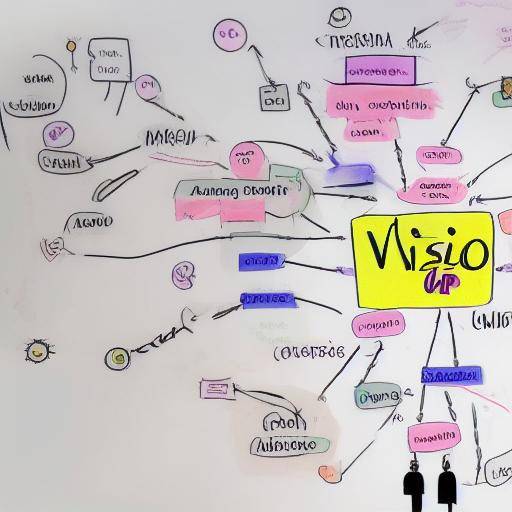
The mind mapping is a graphical representation technique that allows you to organize concepts and ideas visually, with the aim of facilitating the understanding, memory and generation of new ideas. Through the creation of a mental map, connections between different concepts are established, making it a valuable tool for flexible planning. In this article, we will explore how this technique can be integrated into planning to achieve greater adaptability and efficiency in achieving objectives.
History and Background
The concept of mind mapping has its roots in mind theories, creativity and cognitive psychology. Although it is difficult to specify an exact date of its origin, its popularization is attributed to author Tony Buzan in the 1970s. Buzan developed a revolutionary approach to taking notes and generating ideas, based on radial structure and free association.
Over the years, mind mapping has evolved, adapting to the needs of individuals and organizations. In the digital era, numerous tools and applications have emerged that facilitate the creation and use of mental maps, expanding their possibilities and scope.
Analysis in Deep
Benefits of Mind Mapping
The mind mapping presents a number of significant benefits for flexible planning. By visually representing the information, creativity is stimulated and the identification of relationships between different elements is facilitated. This allows greater flexibility in the structuring of ideas and adaptation to changes in the environment.
In addition, mind mapping promotes a more intuitive and deep understanding of the topics covered, which contributes to more informed and flexible planning. Also, by facilitating visualization and organization, mind mapping improves information retention and decision-making.
Challenges in their implementation
Although mind mapping offers many advantages, its effective implementation brings challenges. The development of a mental map requires synthesis, abstraction and synthesis skills, which can be difficult for some individuals. In addition, the process of creating mental maps may require time and practice to be completely dominated.
Current trends
Today, mind mapping has gained popularity in various fields, from education to business management. Technological innovations have allowed the development of specialized applications and software, which has expanded its scope and functionality. In addition, in an increasingly interconnected and changing world, the adaptive capacity and flexibility offered by the mind mapping becomes even more relevant.
Comprehensive review
Practical Applications
The mind mapping has been successfully applied in a wide variety of contexts, from project planning to creative ideas. In project management, the use of mental maps facilitates the identification of key tasks, resource allocation and adaptation to changes in requirements. In the creative field, mind mapping promotes the generation of new ideas, the exploration of interrelated concepts and the identification of innovative solutions.
Best Practices
By integrating mind mapping into flexible planning, it is crucial to follow certain best practices to maximize its effectiveness. These include the use of colors, images and symbols to represent ideas visually attractive. It also recommends periodic review and updating of the mental map to reflect changes in the environment and objectives.
Comparative analysis
Compared to more linear planning approaches, mind mapping highlights its ability to represent the complexity and interconnection of the elements involved in a project or process. While traditional methods tend to impose a rigid structure, mind mapping allows greater adaptability and flexibility, making it especially suitable for dynamic and changing environments.
Practical Tips and Accessible Tips
Steps for Creating a Mental Map
- Identify the central theme: Start by identifying the central theme of your mental map, this will be the starting point for the expansion of ideas.
- Generate ramifications: From the central theme, it generates ramifications that represent subthemes or related concepts.
- Add details: Add details, keywords, images or symbols to each branch to enrich the visual representation.
- Explore connections: Identify and explore the connections between the different branches, fostering the generation of new ideas and perspectives.
- Review and update: Periodically review your mental map, updating it to reflect changes and new insights.
Integration with Flexible Planning
By using mind mapping in flexible planning, it is essential to adopt an iterative and adaptable approach. Since mind mapping promotes exploration of multiple ideas and approaches, it naturally aligns with flexible planning, allowing adjustments and adaptations based on circumstances and changes in objectives.
Recommended tools
Various tools and software are available for the creation and management of mental maps, some of the most popular include MindMeister, XMind and FreeMind. These applications offer advanced features for mental mapping, team collaboration and cloud synchronization, making them ideal for integration into flexible planning.
Ideas and Industry Reviews
Outlook of Experts
According to management and creativity experts, mind mapping is an invaluable tool for flexible planning, fostering nonlinear thinking and exploring different scenarios. Its ability to visually represent the complexity of projects and processes makes it an essential tool to adapt to volatile and dynamic environments.
Industry trends
The use of mind mapping in flexible planning is experiencing significant growth in various industries. From project management to business innovation, there is an increase in the adoption of this technique, supported by the recognition of its capacity to promote creativity, adaptability and problem solving.
Case Studies and Practical Applications
Case Study: Project Management
In a recent case study, a software development company implemented mind mapping in planning a complex project. By using mental maps to represent the interdependencies between the tasks, the team was able to proactively identify and resolve possible obstacles, maintaining the necessary flexibility and adaptability in an agile development environment.
Case Study: Creativity and Innovation
In another prominent case, a design team used mind mapping to stimulate the generation of creative ideas. By visually representing interconnections between different concepts, the team was able to identify innovation opportunities, adapting flexibly to changes in customer preferences and market trends.
Future Trends and Predictions
Future Implications of Mind Mapping
As we enter an era characterized by complexity and uncertainty, the mind mapping is a fundamental tool to address emerging challenges. Its ability to build adaptability, problem solving and innovation places it in a privileged position to play a crucial role in flexible planning and change management.
Predictions for Mind Mapping
Management and creativity experts anticipate that the use of mind mapping in flexible planning will continue to grow significantly in the coming years. As organizations seek to adapt to increasingly complex and dynamic environments, the visual and flexible approach of the mind mapping will become essential for the generation of new ideas, informed decision-making and effective change management.
Conclusions and FAQs
Conclusions
The mind mapping offers a powerful tool for flexible planning, facilitating visualization, creativity and adaptation to changes. By integrating this technique into planning, organizations and individuals can improve their ability to deal with complex and volatile environments effectively.
Frequently asked questions
1. What is the difference between a mental map and a traditional plan?
In a traditional plan, the information is presented in a linear and hierarchical manner, following a predefined structure. In a mental map, information is represented in a non-linear way, fostering exploration, creativity and adaptability.
2. What are the best applications for mental map creation?
Some of the most popular applications for the creation of mental maps include MindMeister, XMind and FreeMind, each with unique features for the development and management of mental maps.
3. How can I integrate mind mapping into my daily planning?
To integrate mind mapping into everyday planning, identify key areas where visualization, creativity and adaptability are fundamental. It uses mental maps to represent projects, processes, objectives and challenges, promoting flexibility and innovation.
4. What benefits does mind mapping offer in business environments?
In business environments, mind mapping facilitates strategic planning, project management and problem solving. By visually representing the interconnection of key elements, mind mapping promotes adaptability and informed decision-making.
5. What are the main future trends related to mind mapping?
Future trends related to mind mapping include greater integration into remote working environments, innovative approaches for team collaboration and the development of specialized tools for change management and strategic planning.
6. How can I improve my mind mapping skills for flexible planning?
To improve your mind mapping skills, practice visual representation of concepts, exploring connections between ideas and adapting to different approaches. Take advantage of the tools and resources available to perfect your mind mapping techniques.
Conclusion
The mind mapping offers a powerful and versatile tool for flexible planning in personal and professional environments. By understanding their history, benefits, challenges and applications, individuals and organizations can effectively integrate mind mapping to promote creativity, adaptability and informed decision-making. With increased complexity and uncertainty in the current business environment, mind mapping is revealed as a fundamental resource to face challenges and take advantage of opportunities agilely and effectively.
In short, the mind mapping is positioned as an essential tool for flexible planning, providing a solid basis for managing complexity and change in dynamic environments. By mastering the art of mind mapping, individuals and organizations can enhance their ability to effectively visualize, plan and adapt, paving the way for achieving their goals and continuous innovation.