Introduction
Manage personal projects can be overwhelming, especially when it comes to organizing ideas, tasks and deadlines. In this article, we will explore a powerful tool to address this difficulty: mind mapping. We will learn how this technique can improve time management and personal organization, giving you a clear and detailed view of how to use it in your projects.
History and Background
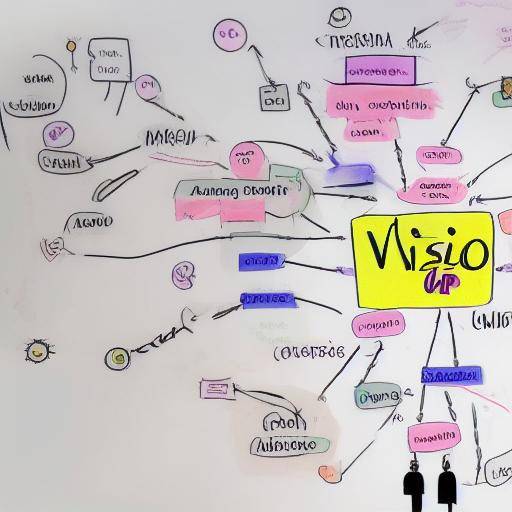
The concept of mind mapping dates back to the 1960s, when psychologist Tony Buzan developed a technique for visually organizing information, fostering creativity and memorization. Since then, mind mapping has evolved to become a widely used personal and professional management tool.
Today, mind mapping has become a key tool for time management and organization. Its ability to visually represent ideas, tasks and deadlines makes it ideal for the planning and execution of personal projects.
Detailed Analysis
Benefits of Mind Mapping for Time Management
The mind mapping provides a panoramic view of the outstanding tasks, allowing them to be prioritized efficiently. By visualizing the interrelations, it is easier to identify critical tasks and avoid overwork loading.
Challenges in Mind Mapping Application
Despite its advantages, mind mapping can present challenges, especially in its initial implementation. Some people may encounter difficulties in effectively structuring their ideas or adapting to a non-linear representation of information.
Comprehensive review
Practices of Mind Mapping
The mind mapping is especially effective for project management. It gives us a general and detailed overview of all the tasks involved, allowing us to clearly identify the steps to follow and the dependencies between the tasks.
Best Practices for Mind Mapping Use
By using mind mapping for time management, it is essential to focus on simplicity and clarity. Avoiding overloading of information and maintaining a clear hierarchical structure are key elements for its effectiveness.
Comparative analysis
By comparing mind mapping with traditional time management methods, it is clear that your visual and nonlinear approach makes it a unique tool. While task lists can be useful for some people, mind mapping offers a more intuitive and complete representation of tasks and their interconnections.
Similarities and Differences with the Traditional Organization
While both approaches share the objective of organizing work, the mind mapping allows greater flexibility and creativity in the representation of information. On the other hand, the traditional organization through lists prioritizes clarity and sequencing.
Practical Tips and Accessible Tips
Step-by-Step Guide to Creating a Mind Map
- Identify the central theme of your mind map.
- List the main ideas associated with the topic.
- Add secondary ramifications with specific details.
- Use colors and symbols to highlight connections and priorities.
Tips for Maximizing the Effectiveness of Mind Mapping
- Limit information on each node to maintain clarity.
- Use colors and fonts to highlight key information.
- Review and update the mind map periodically to reflect progress and changes.
Conclusions
In short, the mind mapping is a valuable tool for time management and personal organization. Its visual and non-linear approach offers a unique perspective to effectively address personal projects. By incorporating the mind mapping into your planning routine, you can significantly improve the management and execution of your personal projects.
Frequently asked questions
What is the difference between mind mapping and task lists?
The mind mapping provides a visual and non-linear representation of the information, allowing a more holistic view of the tasks and their interconnections. On the other hand, task lists are sequential and prioritize clarity in the presentation of tasks.
How can I overcome initial resistance to mind mapping?
Initial resistance to mind mapping is common, especially among those accustomed to more traditional methods of organization. To overcome it, it is useful to start with small projects and practice regularly to become familiar with the technique.
What tools can I use to create mind maps?
There are several tools available to create mind maps, both in digital and paper format. Some of the most popular include MindMeister, XMind, and FreeMind for digital applications, and simply paper and pencil for traditional versions.
Is mind mapping useful for time management at work?
Yes, mind mapping is equally useful in working environments. For time management at work, mind mapping can help you visualize projects, assign tasks and manage deadlines effectively.
What are the benefits of incorporating mind mapping in time management?
By incorporating the mind mapping in time management, benefits can be achieved as a clear visualization of tasks, efficient prioritization and greater creativity in planning.
Is the mind mapping effective for large-scale personal projects?
Yes, mind mapping is especially useful for large-scale personal projects, as it allows for detailed and flexible representation of tasks, timelines and connections between them.
Conclusion
In conclusion, mind mapping is a powerful tool that can significantly improve time management and personal organization. By adopting this technique, you can get a clear and detailed view of your personal projects, which will allow you to plan, prioritize and execute more effectively. Incorporate the mind mapping into your daily routine and discover how you can transform your approach to managing personal projects.